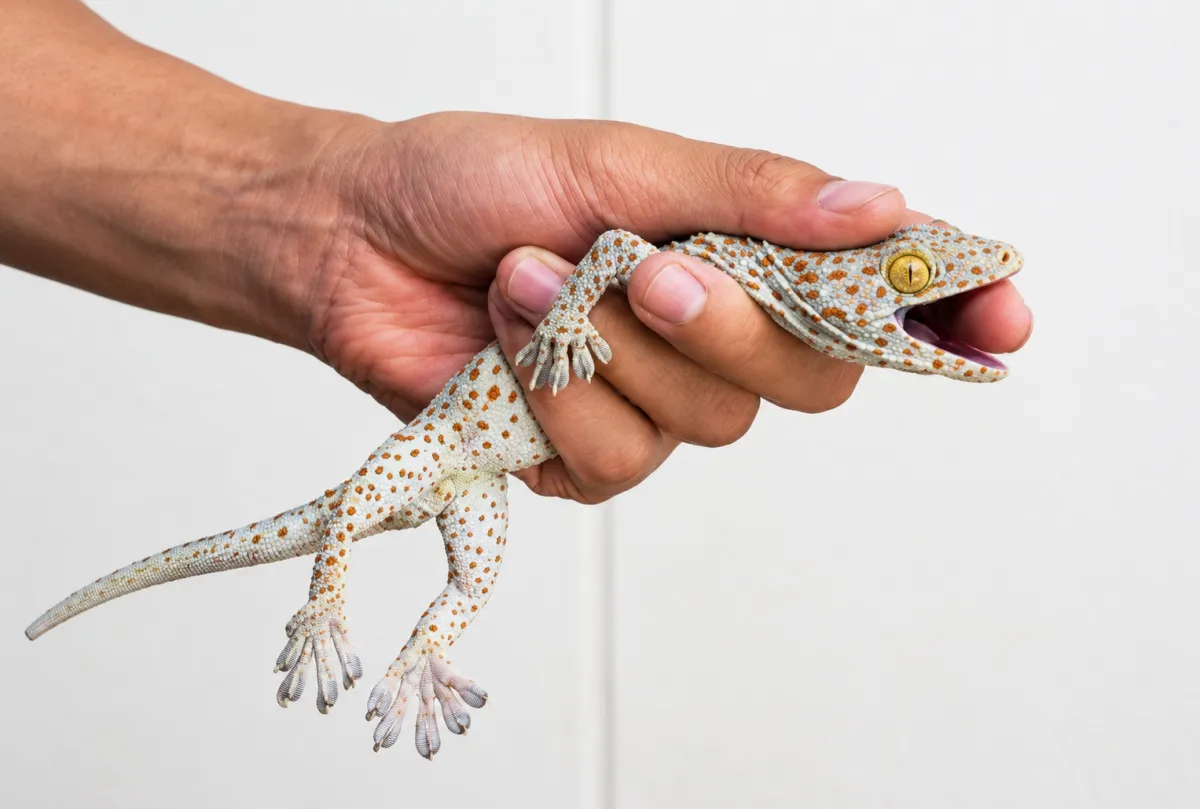

Finding a gecko inside your home can be surprising, especially when you hear a sudden sound from the wall or see a large Tokay Gecko near the ceiling.
The good news is that the geckos commonly found around homes are not poisonous and are not venomous.
However, that does not mean every gecko should be handled with bare hands.
The level of risk also depends on the species. A large Tokay Gecko can deliver a painful defensive bite, while the much smaller House Gecko is generally harmless to people.
Understanding which gecko you are dealing with makes it easier to respond
calmly and safely.
Are Geckos Venomous or Poisonous?
No. The Tokay Gecko (Gekko gecko) and House Gecko (Hemidactylus frenatus) discussed in this article are not poisonous and are not venomous.
This distinction is important because the words “poisonous” and “venomous” describe different ways toxins can affect an animal.
For a broader look at why geckos appear around homes in Bali, see our guide to geckos in Bali and how to manage them.
A venomous animal actively delivers venom, usually through a bite or sting. A poisonous animal can cause harm when its toxins are ingested, touched, or otherwise introduced into the body.
Neither of these descriptions applies to the Tokay Gecko or House Gecko.
So if you see one climbing across a wall, there is no reason to assume that it can poison you or inject venom.
The main safety concern with a gecko is therefore not venom. With a large Tokay Gecko, the concern is its bite if the animal feels threatened or is handled.
Tokay Gecko vs. House Gecko: How to Tell the Difference
Not every gecko inside a house presents the same level of physical risk.
Two common types are the Tokay Gecko (Gekko gecko) and the House Gecko (Hemidactylus frenatus).
Identify the gecko you are seeing
Explore the species profiles to learn more about their appearance, behaviour, habitat, and characteristics.
 Species Profile
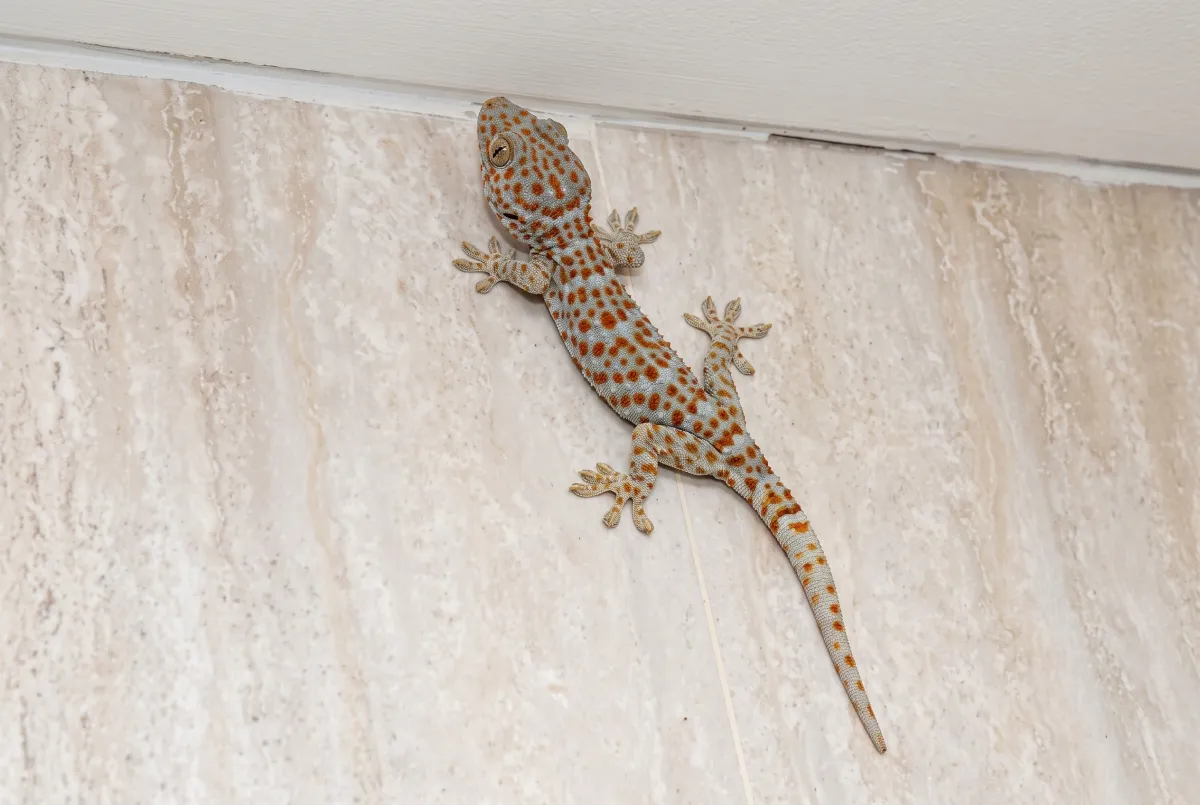
A much larger and more noticeable gecko known for its distinctive spotted appearance and loud “to-kay” call.
 Species Profile
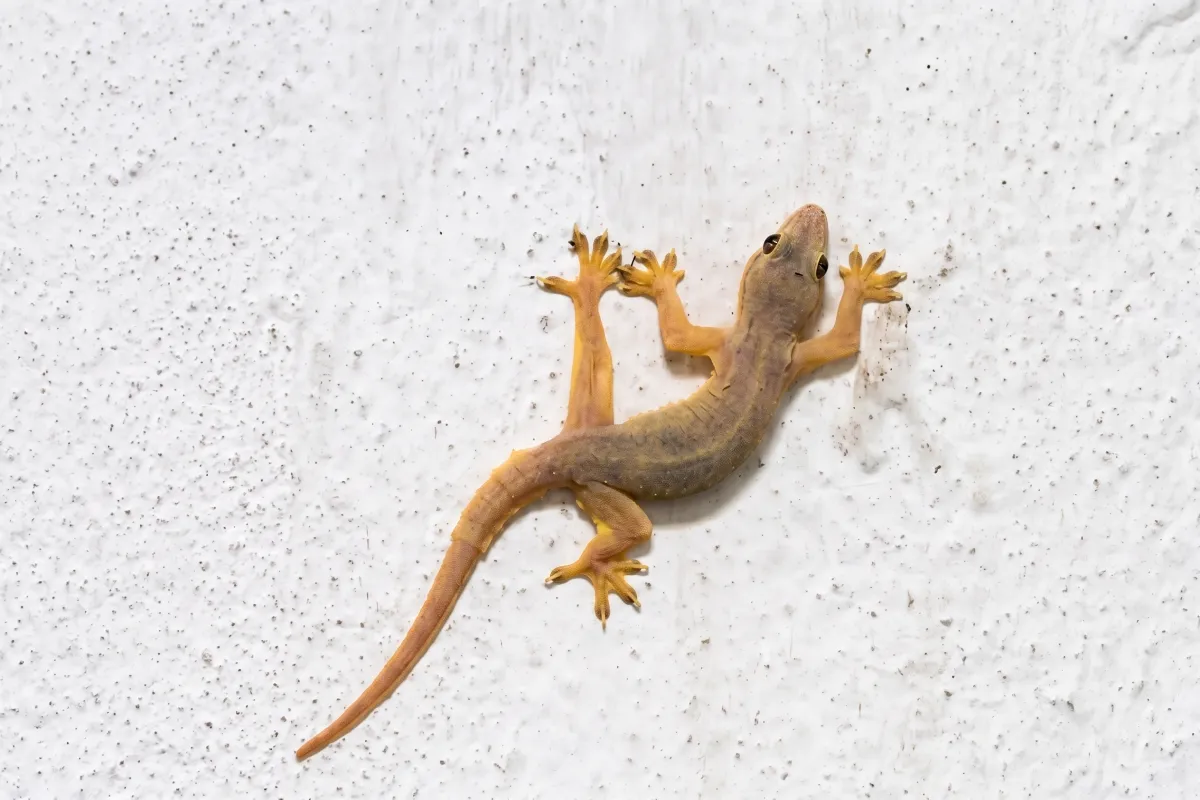
A small gecko commonly found around buildings and residential areas in Bali, often active around walls and artificial lights.
Tokay Gecko
The Tokay Gecko is large and robust compared with the small geckos commonly seen inside buildings.
It has a bluish-grey body with distinctive brick-red or orange spots.
Its large size and strong jaws make it easy to distinguish from a typical House Gecko.
Tokays are also known for their very loud “to-kay” call.
If you encounter a large, brightly marked gecko making a loud call, it is likely to be a Tokay Gecko.
House Gecko
The House Gecko is much smaller.
It can have a pale or somewhat translucent appearance, particularly under certain lighting conditions at night.
Its vocalizations are much quieter, often described as clicks, chirps, or small squeaking sounds.
House Geckos are generally shy and are not considered dangerous to people. Their small mouths are not suited to causing significant injury to human skin.
A Simple Comparison
Tokay Gecko vs House Gecko
A quick visual and behavioural comparison of two geckos commonly encountered around homes and buildings in Bali.
| Feature | Tokay Gecko Gekko gecko | House Gecko Hemidactylus frenatus |
|---|---|---|
| Size | Large | Small |
| Appearance | Bluish-grey with red or orange spots | Pale to translucent |
| Sound | Loud “to-kay” call | Softer clicks or chirps |
| Habitat | Buildings, walls, roofs, and sheltered areas | Buildings, walls, ceilings, and areas around lights |
| Activity | Mostly nocturnal | Mostly nocturnal |
| Diet | Insects and other small prey | Small insects and other arthropods |
| Behaviour | More defensive if threatened or handled | Generally avoids direct contact |
| Main Safety Concern | Defensive bite if threatened | Generally harmless to people |
Listen and compare. The audio controls provide examples of the characteristic sounds associated with each gecko.
If you are unsure which species you have seen, size, colour and sound are useful starting points for identification.
Do Geckos Bite?
Yes, Tokay Geckos can bite.
A Tokay has strong jaws, and its bite can be painful. When threatened or handled, it may respond defensively by biting. It can also hold on after biting.
This is why a Tokay Gecko should not be picked up simply because it has entered a room.
The important distinction is that this is a defensive response, rather than evidence that the animal normally seeks out people to attack.
The safest approach is therefore to avoid cornering, grabbing, or provoking a Tokay.
House Geckos are different. Their much smaller mouths mean they are generally not capable of causing the type of skin injury associated with a Tokay bite.
What If a Tokay Gecko Is Inside the House?
Do not try to catch it with your bare hands.
Instead, give it space and use a non-lethal method to guide it out of the room when practical. A broom can be used to gently encourage it toward an exit, or a container can be used to contain the animal without direct hand contact.
The goal is simple: remove the gecko without creating a situation in which it feels trapped or threatened.
What About Gecko Droppings and Hygiene?
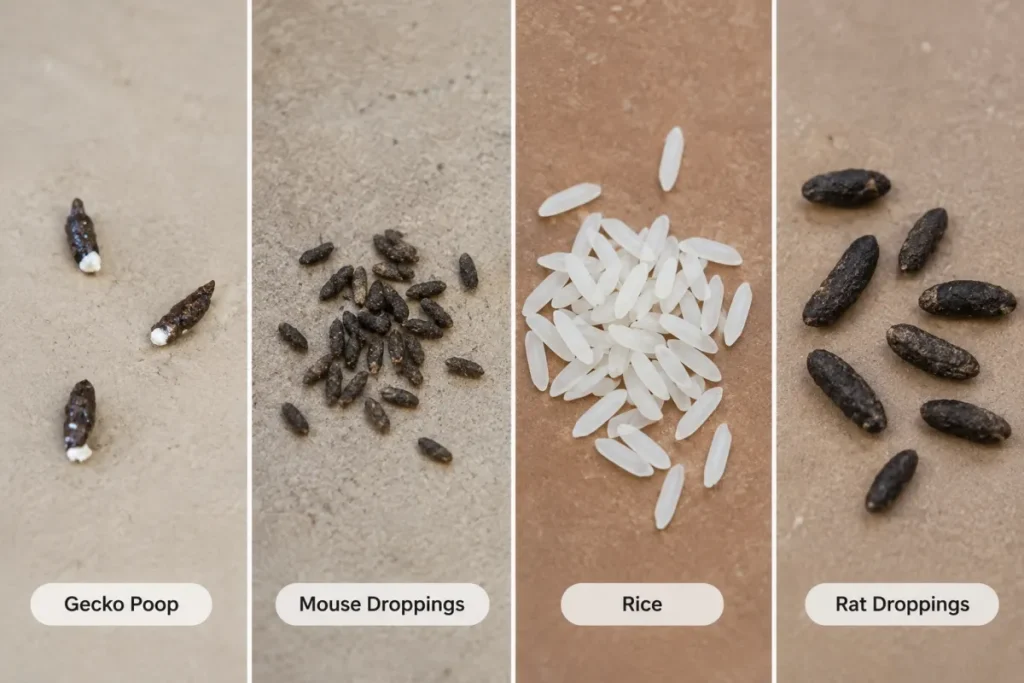
The gecko itself may not be venomous, but its droppings deserve normal hygiene precautions.
Reptiles can carry Salmonella, and the bacteria can be present in their faeces. Transmission can occur through the faecal-oral route when contaminated material eventually reaches the mouth.
This does not mean that finding gecko droppings automatically makes a home unsafe.
The practical response is good hygiene.
If you find droppings:
- Avoid touching them with bare hands.
- Remove the contaminated material carefully.
- Clean the affected surface.
- Wash your hands thoroughly afterwards.
- Take particular care around surfaces used for food preparation.
The principle is straightforward: clean the contamination and wash your hands rather than treating the presence of a gecko as a reason to panic.
What Should You Do If You Find a Gecko Indoors?
The safest response depends partly on which species you are dealing with.
If it is a small House Gecko, there is usually little reason for concern. You can simply allow it to leave the room or guide it toward an exit.
If it is a large Tokay Gecko, avoid handling it directly.
A simple non-lethal approach is to use a broom to gently guide the gecko toward an open door or other exit. Another option is to place a suitable container over the animal and carefully manage the situation without putting your hands near its mouth.
The important thing is to avoid unnecessary physical contact.
Do not corner the gecko, grab it suddenly, or attempt to hold a Tokay for inspection.
If you are uncertain about the species, treat a large gecko cautiously and avoid direct handling.
Should You Be Worried About a Gecko in Your Home?
For most people, seeing a gecko indoors is not a reason for alarm.
They are not venomous or poisonous, and the small House Gecko presents little physical danger to people.
A Tokay Gecko deserves more caution because it has a strong bite and may respond defensively when threatened or handled.
This means that the best response is usually calm identification rather than panic.
Look at the animal’s size and appearance. Avoid direct handling if it is a large Tokay. If droppings are present, clean them using normal hygiene precautions.
In other words, there is a difference between an animal being potentially defensive and being dangerous by nature.
Common questions about gecko safety
Practical answers about gecko bites, safety, hygiene, and responsible handling around homes.
Are geckos dangerous to humans?
The geckos discussed here are generally not dangerous to humans. They are not poisonous or venomous.
The main physical concern is the defensive bite of a Tokay Gecko if it is threatened or handled.
Can a Tokay Gecko bite?
Yes. Tokay Geckos can deliver a strong and painful bite when they feel threatened or are handled.
Avoid grabbing or provoking them.
Can House Geckos bite people?
House Geckos are generally harmless to people. Their small mouths are not suited to causing significant injury to human skin.
Are Tokay Geckos poisonous?
No. Tokay Geckos are not poisonous or venomous.
Their main defence relevant to people is their bite, not venom.
What should I do if I find a Tokay Gecko inside?
Avoid touching it with your bare hands.
Give it space and, when practical, use a non-lethal method such as gently guiding it toward an exit or using a container to move it without direct hand contact.
Can gecko droppings carry Salmonella?
Yes. Reptile faeces can carry Salmonella, so basic hygiene is important when cleaning gecko droppings.
Wash your hands thoroughly after cleaning and avoid transferring contaminated material to your mouth or food preparation areas.
Is it safe to leave a House Gecko alone?
Generally, yes. House Geckos are considered harmless to people, so there is usually no need to handle them simply because they are present indoors.
The Bottom Line
Geckos may look intimidating, especially when a large Tokay Gecko suddenly appears on a wall. But appearance should not be confused with danger.
Tokay and House Geckos are not poisonous or venomous.
The main difference is their physical behaviour. A Tokay Gecko can deliver a painful defensive bite when threatened or handled, while the much smaller House Gecko is generally harmless to people.
If you encounter a gecko indoors, identify it first, avoid unnecessary handling, and use non-lethal methods when you need to move it.
And if you find gecko droppings, focus on basic hygiene rather than fear.
Understanding the animal is usually the first step toward dealing with it wisely.
Sources used for this article
This article was informed by veterinary references, health guidance, and natural history resources.
Sources are provided for transparency and further reading. They support the factual and health-related information discussed in this article.