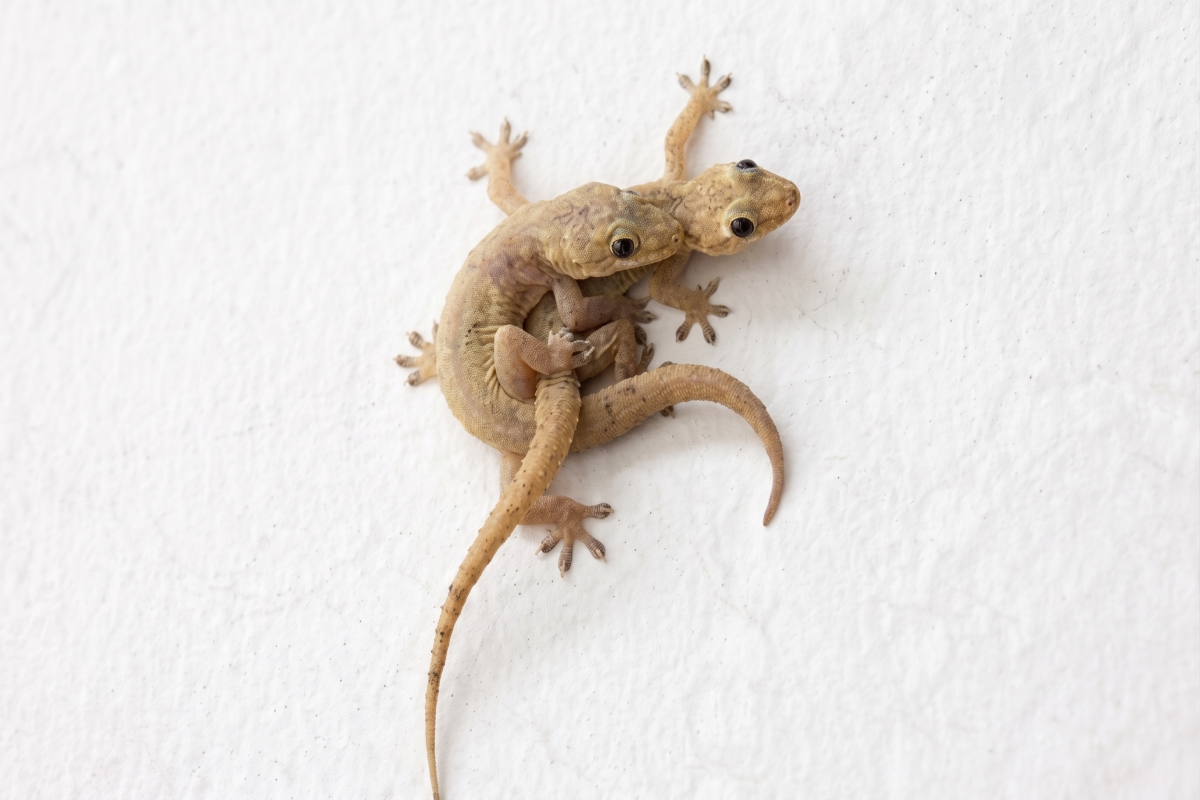

If you live in Bali, you have probably seen a gecko on a wall, heard clicking from the ceiling at night, or noticed small droppings around your home or villa.
For many people, these sounds and unexpected encounters can be unsettling. But geckos are generally not dangerous to people. They are also natural insect hunters, which means their presence around a property is not always a bad thing.
Still, having geckos regularly enter living spaces can become a nuisance. The most useful approach is not simply to ask how to kill or repel them, but to understand why they are attracted to the property in the first place.
What Kind of Geckos Live in Bali?
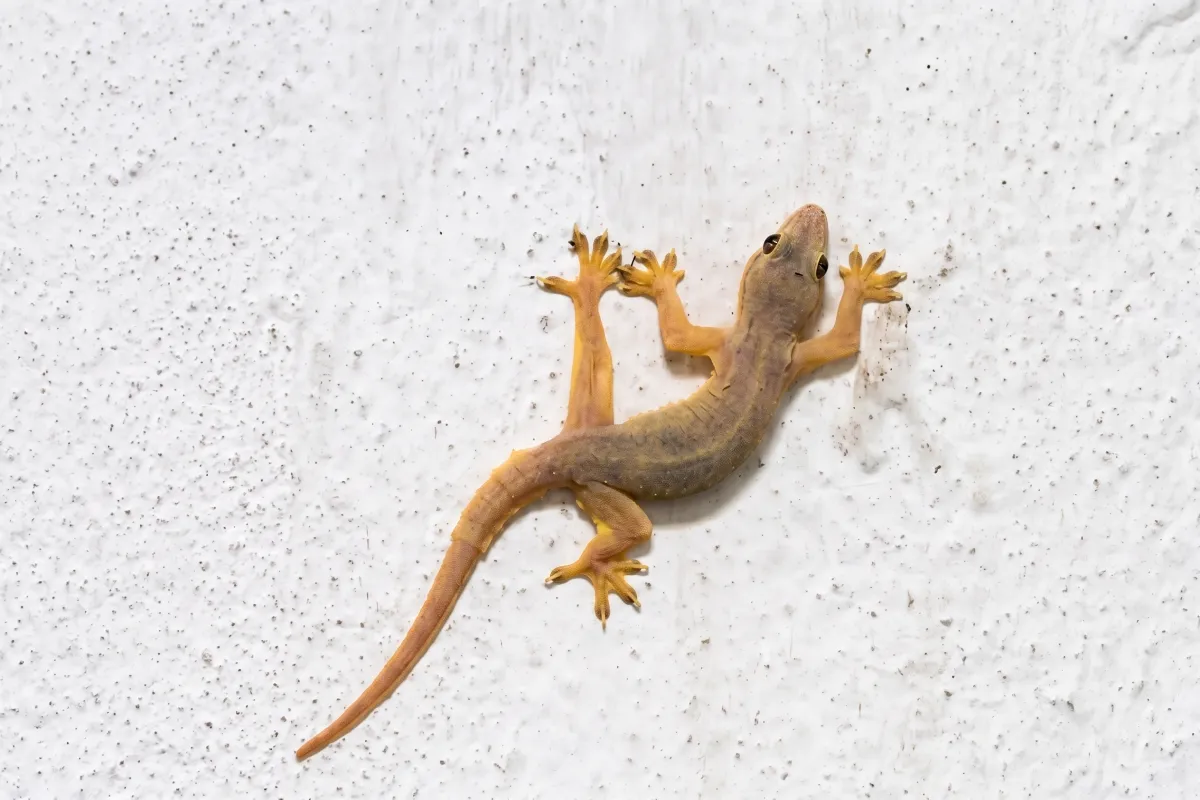
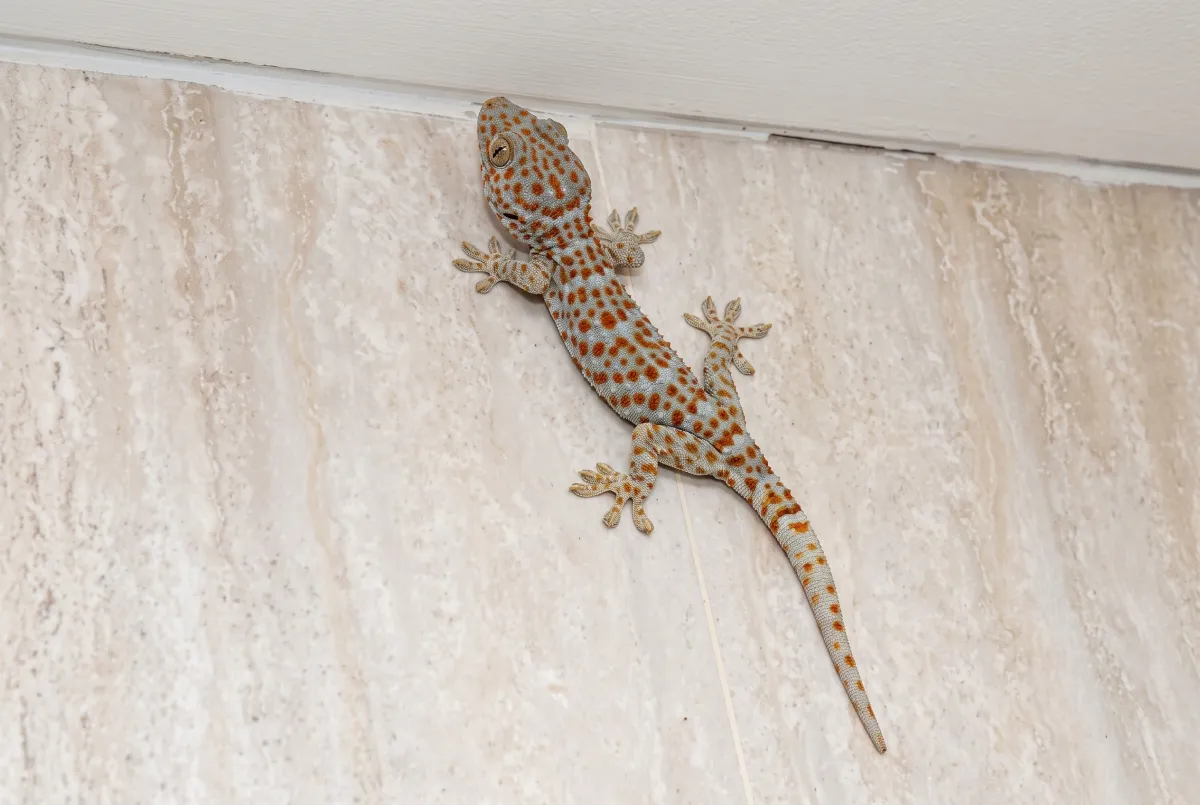
Two geckos commonly associated with residential environments in Bali are the Tokay Gecko (Gekko gecko) and the House Gecko (Hemidactylus frenatus).
The House Gecko is relatively small and is often found around buildings. It can produce clicking or squeaking sounds as part of its communication and behaviour.
The Tokay Gecko is much larger and more noticeable. It has a distinctive spotted appearance and is famous for its loud call, commonly described as “to-kay.”
Knowing which gecko you are seeing can be useful because their size, appearance and behaviour are different.
Identify the gecko you are seeing
Explore the species profiles to learn more about their appearance, behaviour, habitat, and characteristics.
 Species Profile
A small gecko commonly found around buildings and residential areas in Bali, often active around walls and artificial lights.
 Species Profile
A much larger and more noticeable gecko known for its distinctive spotted appearance and loud “to-kay” call.
Why Do Geckos Make Sounds at Night?
One of the easiest ways to notice a gecko is to hear it before you see it.
House geckos can produce clicking or squeaking sounds associated with communication, territorial behaviour and mating. Tokay geckos are particularly well known for their loud calls.
For someone staying in a Bali villa or home, these sounds can seem surprisingly loud at night. However, hearing a gecko calling does not mean that it is attacking people or behaving aggressively.
In most cases, the sound is simply part of the animal’s normal behaviour.
In Bali, however, Tokay Gecko calls also have a place in local folklore. You can explore the traditional meanings associated with gecko calls in our guide to the Balinese gecko myth.
Are Geckos in Bali Dangerous?
Geckos found around homes are not venomous. However, this does not mean that every interaction with a gecko is completely risk-free.
Tokay geckos have powerful jaws and can deliver a painful bite if they feel threatened or are handled. Reptiles Magazine describes Tokays as capable of holding on tightly after biting.
For this reason, it is better not to catch or handle a Tokay Gecko unnecessarily.
If a gecko is inside your home, giving it space is usually safer than trying to grab it with your hands.
Gecko Droppings: Hygiene and Safety
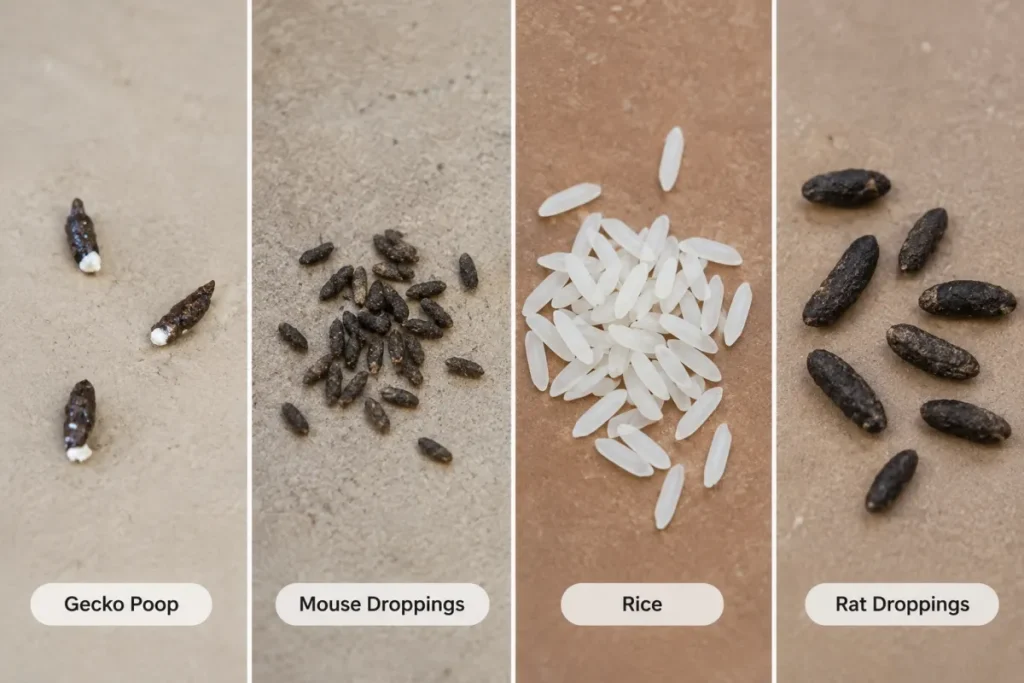
Gecko droppings are a more practical hygiene concern than the gecko itself.
Reptiles can carry Salmonella, and the bacteria can be shed in their faeces. The main concern is transmission when contaminated material is eventually ingested. ARAV explains that Salmonella can spread when people put their hands or objects contaminated with reptile faeces into their mouths.
This does not mean that seeing gecko droppings automatically means that your home is dangerous. HPSC notes that proper hygiene is an important measure when people have contact with reptiles or reptile faeces.
How to Clean Gecko Droppings
If you find gecko droppings inside your villa or home:
- Avoid touching the droppings with bare hands.
- Remove the contaminated material carefully.
- Clean the affected surface.
- Wash your hands thoroughly with soap and water afterwards.
- Pay particular attention to surfaces near food preparation areas.
The objective is simple: manage the hygiene risk without creating unnecessary fear of geckos.
Is It Gecko Poop or Mouse Poop?
If you find a small dropping and did not see the animal that left it, identification may not always be certain from the dropping alone.
One useful characteristic of lizard and gecko faeces is the presence of a white uric-acid portion. This can help distinguish lizard or gecko waste from some other types of animal droppings.
Location and repeated observations can also provide useful clues. Gecko droppings may be found around walls and areas where geckos regularly shelter.
If identification remains uncertain, observe the area at night rather than assuming that every small dropping is from a gecko.
Why Are Geckos in My Bali Villa?
If geckos repeatedly appear around your villa, there is usually a reason.
Buildings can provide several things that make a property attractive to geckos. The Natural History Museum describes three important elements around human structures:
Light, Water and Shelter.
1. Light
Outdoor and indoor lighting can attract insects. Since insects provide food for geckos, areas with abundant insect activity can also attract geckos.
A brightly lit outdoor wall can therefore become a convenient hunting area.
You do not necessarily need to eliminate all outdoor lighting. Instead, look at where lighting is being used and whether it is contributing to insect activity around doors, windows and walls.
For example, lights that are not needed throughout the night can be switched off when they are no longer required. The objective is to reduce unnecessary conditions that attract insect prey around the building.
2. Water
Water and moisture can also make an environment more suitable for geckos.
Check areas around the property where water is unnecessarily present, particularly if they are also associated with insect activity.
The goal is not to remove every source of water. Instead, identify avoidable moisture and address the conditions that make the property more attractive.
3. Shelter
Buildings provide plenty of hiding places.
Small cracks, gaps around walls, spaces beneath eaves and other narrow areas can give geckos places to hide during the day.
This is why simply removing one gecko may not solve a recurring problem. If the same property continues to provide food, water and shelter, another gecko may use the same conditions.
How to Keep Geckos Out Without Killing Them
If you want fewer geckos inside your villa or home, environmental management is generally more useful than relying on homemade repellents. For a practical step-by-step approach, see how to keep geckos out of your home without using harsh methods.
The objective is to make the property less attractive and reduce opportunities for geckos to enter.
Seal Cracks and Gaps
Check common entry points around:
- Windows
- Doors
- Roof areas
- Pipes and utility openings
- Wall cracks
- Other gaps leading into indoor spaces
Sealing potential entry points reduces the number of places where geckos can enter and hide.
Manage Outdoor Lighting
Because lights can attract insects, managing unnecessary lighting can help reduce insect activity around the building.
Start with the simplest measures:
- Switch off outdoor lights when they are no longer needed.
- Avoid leaving unnecessary lights on throughout the night.
- Pay particular attention to lighting close to doors and windows.
- Observe whether insect activity is concentrated around particular lights.
The important point is not that one particular bulb type is a guaranteed gecko repellent. The evidence supports a more basic principle: light can attract insects, and insects can attract geckos.
Check Window Screens
Damaged or poorly fitted screens can provide opportunities for insects and small animals to enter living spaces.
Keeping screens intact can therefore help reduce access to indoor areas.
Do Not Rely on Internet Home Remedies
You may find advice online recommending garlic, eggshells or homemade sprays as gecko repellents.
These methods are widely discussed, but the evidence package for this article does not establish them as reliable methods of gecko exclusion.
Rather than depending on an unproven remedy, start with the physical conditions of the property:
reduce unnecessary insect attraction → address avoidable water and moisture → close potential entry points.
This is more consistent with an Integrated Pest Management approach.
Gecko Folklore in Bali
Geckos are not only part of Bali’s natural environment. They also appear in local cultural beliefs.
In Balinese folklore, the number of times a Tokay Gecko calls can traditionally be interpreted using a counting system from one to fifteen, with different counts associated with different meanings.
These interpretations belong to folklore and traditional belief rather than scientific biology.
There is also a different tradition associated with Javanese belief, where gecko calls have been interpreted through an odd-and-even system.
The distinction is worth making because cultural traditions should not be presented as scientific explanations for gecko behaviour.
For some people, however, hearing a Tokay Gecko at night is not simply a nuisance. It can also be part of the cultural character of living in Bali.
Should You Get Rid of Geckos?
Not necessarily.
Geckos can contribute to natural insect control because they feed on insects such as mosquitoes, moths and crickets. Their presence can therefore have an ecological benefit around a property.
The question is really about balance.
If a few geckos are living outdoors and helping to feed on insects, there may be little reason to interfere.
If geckos are entering bedrooms, leaving droppings on frequently used surfaces or becoming a recurring nuisance, then managing the conditions around the property makes more sense.
Rather than treating every gecko as a pest that must be eliminated, an Integrated Pest Management approach asks a more useful question:
Why is the property attractive to them?
Reduce unnecessary light that attracts insects. Address avoidable water and moisture conditions. Seal cracks and gaps. Keep screens in good condition. Maintain basic hygiene when cleaning droppings.
These measures address the conditions that allow the problem to continue.
Common questions about geckos in Bali
Practical answers to common questions about gecko behaviour, hygiene, prevention, and responsible management.
Do Tokay geckos bite?
Yes. Tokay geckos can bite, particularly when they feel threatened or are handled. Their bite can be painful, and they may hold on after biting.
The safest approach is to avoid grabbing or provoking a Tokay Gecko unnecessarily.
Are geckos in Bali poisonous or venomous?
No. The geckos discussed in this article are not venomous. However, a Tokay Gecko can still cause a painful bite if threatened or handled.
Is gecko poop dangerous?
Gecko and other reptile faeces can carry Salmonella. The important issue is hygiene and preventing contaminated material from reaching the mouth. Washing hands after cleaning droppings and keeping contaminated material away from food preparation areas are sensible precautions.
How can I tell if a dropping is from a gecko?
Gecko and other lizard droppings commonly have a white uric-acid portion. Finding the droppings on walls or around typical gecko hiding areas can also provide a clue.
However, if you did not see the animal that produced the dropping, avoid making an overly confident identification from appearance alone.
Why do geckos keep coming back to my house?
Look for the conditions that make the property attractive to them: light, water and shelter.
Outdoor lighting can attract insects, water can provide moisture or drinking opportunities, and cracks or narrow spaces can provide shelter.
Addressing these conditions is generally more useful than repeatedly removing individual geckos.
Do garlic or eggshells really repel geckos?
There is not enough evidence in the research package for this article to describe these methods as reliable gecko repellents. They are better treated as unproven home remedies rather than established pest-management methods.
Should I kill geckos around my villa?
Not necessarily. Geckos can contribute to natural insect control, so their presence outdoors does not automatically mean that they need to be removed.
If they are repeatedly entering indoor areas or creating hygiene problems, focus first on managing the conditions that attract them and limiting their access to the building.
The Infestica Approach
A gecko problem does not always require a chemical solution.
Understanding the relationship between light, food, water and shelter can often tell you more about why geckos are appearing than simply looking for something to spray.
That is the foundation of responsible pest management: understand the cause first, then choose the appropriate response.
Geckos may be an unexpected part of life in a tropical property, but with the right approach, you can manage their presence without unnecessary fear or unnecessary harm.
Understand. Prevent. Control Wisely.
Sources used for this article
This article was informed by scientific publications, veterinary guidance, natural history resources, and cultural references.
Sources are provided for transparency and further reading. Cultural references describe traditional beliefs and should not be interpreted as scientific evidence.